DUNGEON CITY RUMBLE / UPDATE
Tea stands, tarot and a new look
What's new to play in Dungeon City since the last entry, how the game now looks and gets made, and a few things still only planned.
A lot landed since the November 4 entry, including a whole new cast. The first half of this post is what you can play. The second is what changed underneath, with what isn't done said plainly. Near the end is a short list of plans, kept apart so nothing unbuilt passes for finished.
New to play
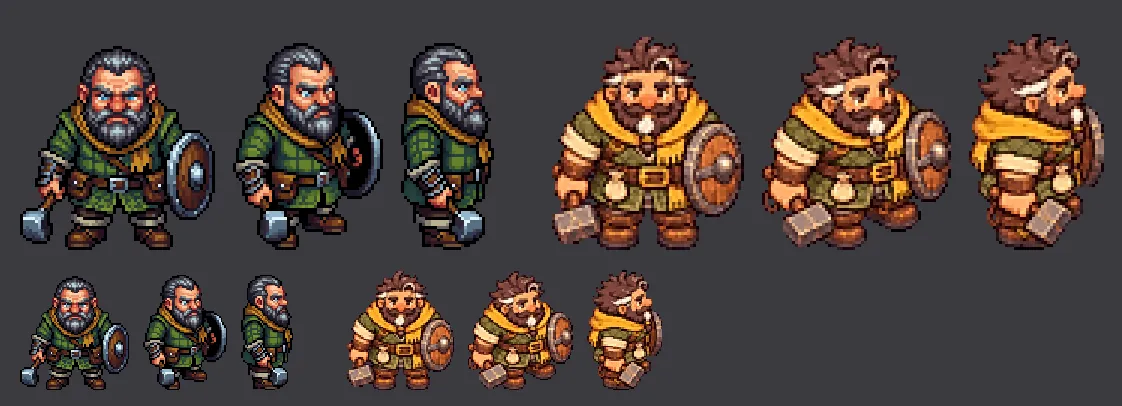
A new cast, and your own party. The old stand-in party is gone. There's now a team screen before each delve with 34 adventurers to choose from, all open during the alpha, and a suggest button if you'd rather not choose. Each has new sprites on the map and in fights. Eighteen foes got new art too, from the saucepan-helmeted goblin to a stag with flowers in its antlers. Eight of those have no fights to appear in yet, so ten of them are what you'll meet today, and the rest of the bestiary is still old art.
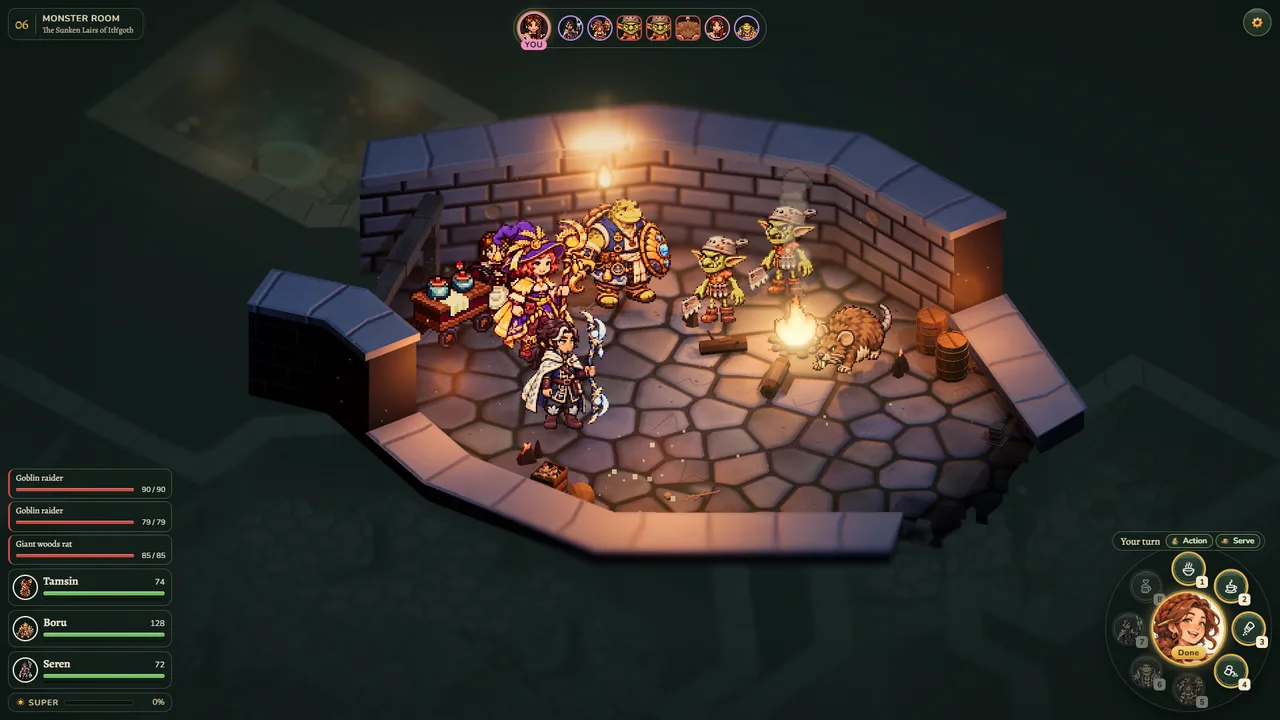
Tarot fortunes. Before a delve you can choose to draw one tarot card, and it gives the whole expedition one small blessing: a little extra health after each victory, a shield at the start of every fight, a better chance of finds from searches, or more coins. There are 40 cards in six illustrated sets, such as the Winter Court, the Ember Revel and the Velvet Midnight, each with its own card back. You start with the first set, and the others unlock through visits to witches, which are stand-in visits for now. The draw is staged like a gacha pull, with a stack of cards that fans out, lifts one and flips it. Skipping it gives the same card. One card, Late Arrival, even sends a very small zombie to help for a moment.
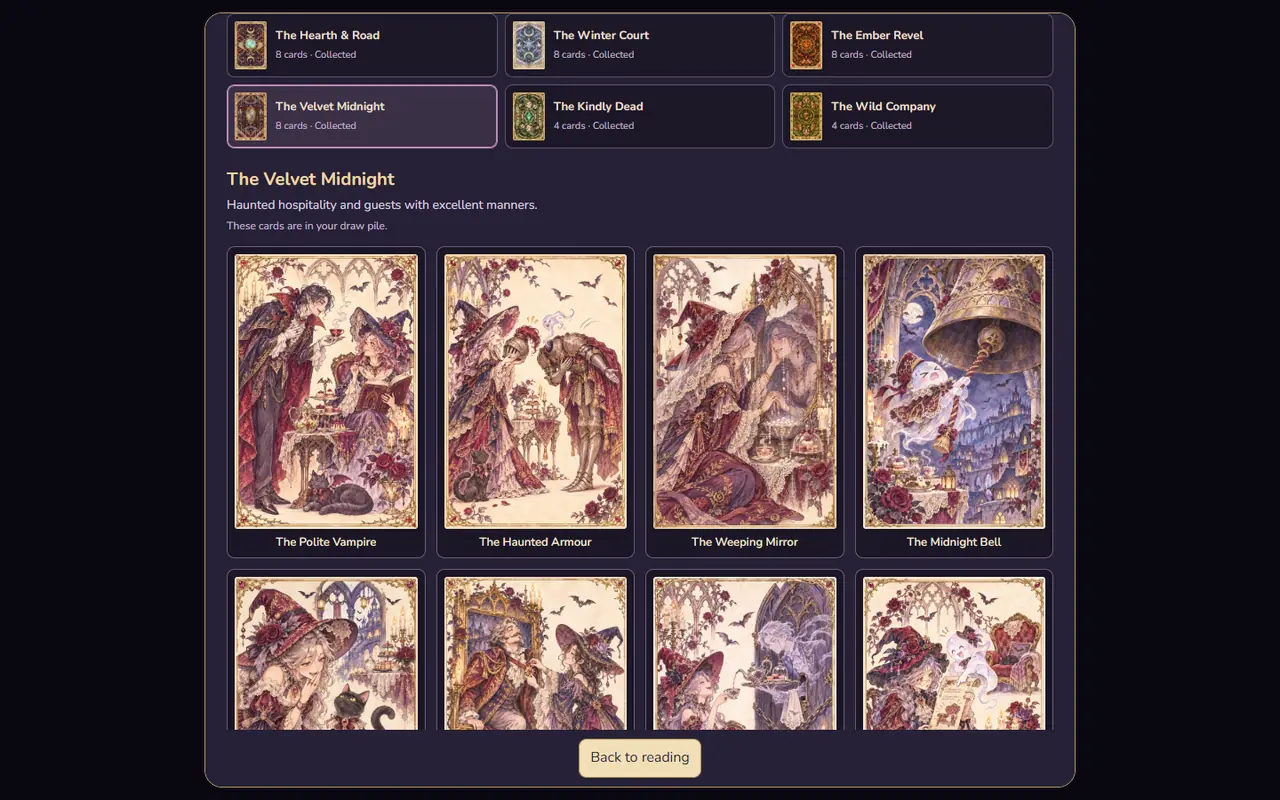
A chicken in the party slot. One tarot card is The Chicken, and it lends the party a tiny fighter for that expedition: a plain Battle Chicken, a Sir Clucks in blue knight armour, or a Cluck Musashi in a red samurai outfit. Each pecks for exactly 1 damage when the barmaid's turn comes round. It only turns up in battle, and permanent pets are a later step.
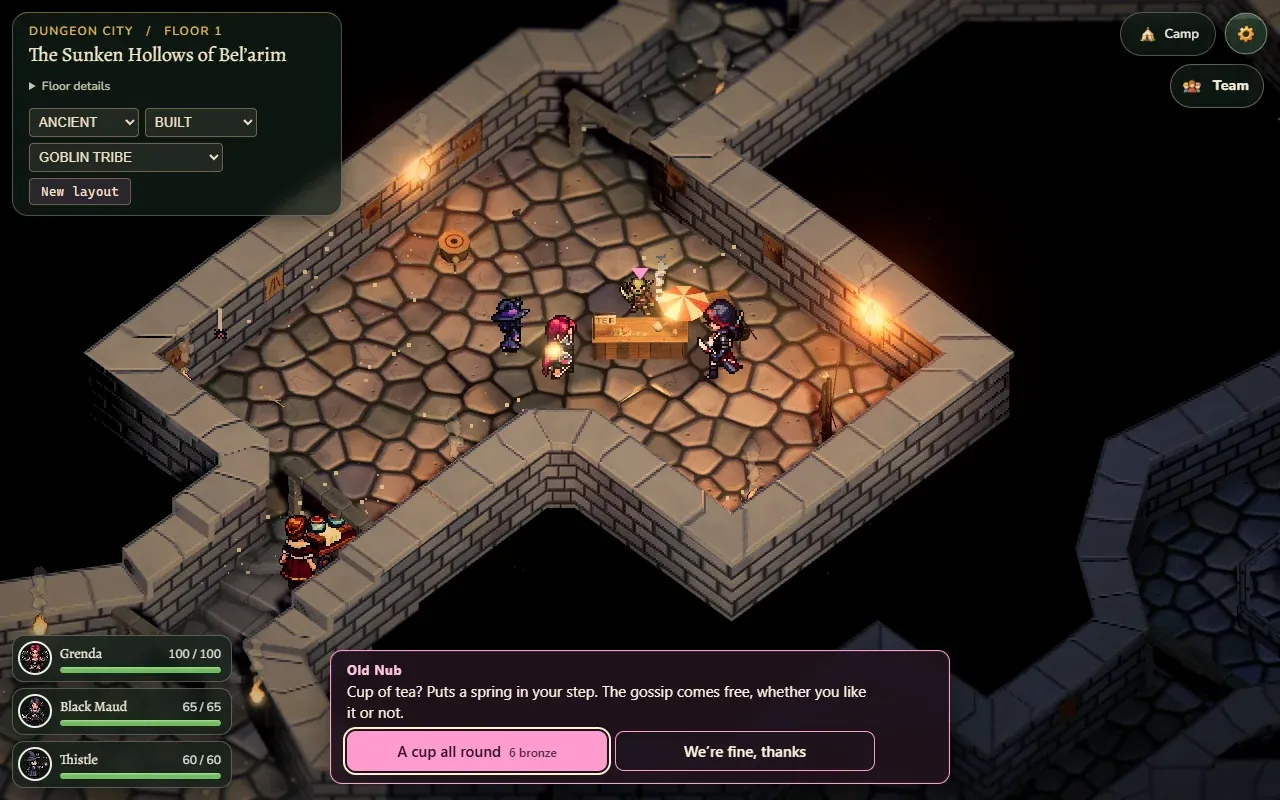
Rooms with a surprise. A rare room is never a fight. A dungeon has at most one, and often none. It shows on the route choice as a pink star with a vague name such as "A smell of tea". So far there are two kinds: an abandoned feast the party tucks into, and a retired monster running a tea stand, which turns up on floors where a faction lives. In the picture at the top he offers a cup all round for 6 bronze, and a party with empty pockets can have it on the house. The feast gives the party a boon, called Well Fed, that carries into the next fight.
Chests and finds. About one floor in three has a locked chest. Nobody has to do anything: whoever has the most Luck steps up, three tumblers tick, and it either opens or jams with a few coins and a joke. A jammed lock never punishes you. A good find now gets a reaction too: the finder turns, hops and says something in character.
Camps that fight back. On lair floors the big camps are bigger, with more tents and sometimes two fires. About one in three is a wave room, where the fight doesn't end when the first group falls: the next comes in, up to three at a time, with no healing in between. A won camp shows it afterwards, with its fire down to embers and its tents sagging. Ordinary fight rooms also gained about 22% more floor, so the party has room to stand.
Flashier supers. Every super is now a short comic scene. The barmaid's shakes a capsule bowl and pulls a random prize, never a dud. A tap skips any of it.
Looking after the party. Hearth broth can now get a fallen adventurer back up, but only to a quarter of their health, and everyone still standing after a win recovers 15%. The first floor is also a little kinder. All of this was tuned in simulation, and nobody has played it by hand yet.
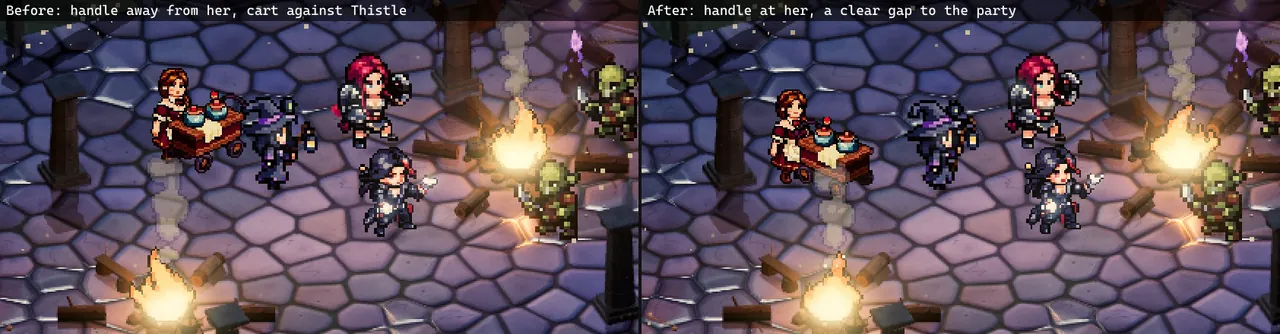
The barmaid and her cart. She now turns with her cart, and she breathes, looks around and flinches when someone is hurt. Twelve story barmaids and two proposed witches have kits too, tested in simulation against random parties. They aren't in the game, and ordinary rooms can't tell them apart.
Under the hood
A new way to make sprites. The sprites follow one spec now, about 42 pixels per world unit. ChatGPT's Sol 6.1 image model draws each character as a sheet of eight cells, and ordinary code does the rest: it removes the background, shrinks each cell to 128 by 128, lines every figure up on one foot line, gives the sheet one palette and rejects bad sheets. Filing the result into the game is automated too. All 35 roster characters and the first 19 foes came to about 44 million tokens. Sol's faces come out softer than the PixelLab pilot's, and some small folk draw taller than their designs, so there's more to tune.
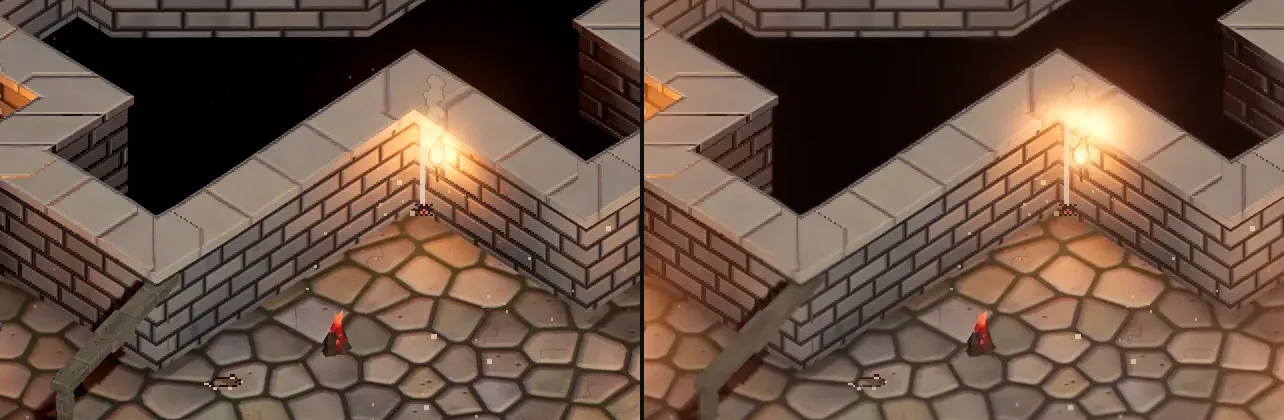
Desktop only, and what it opened up. The target is now a desktop browser with a real GPU, with an RTX 3060 or 4060 as the baseline. An audit found that the dungeon wasn't short of GPU. A map frame takes about a millisecond on the RTX 3080 Ti it's built on. So the old limits went up: 20 lamps on the map instead of 12, 10 in a fight instead of 6, and sharper shadow maps.
New lighting. Four effects are now the game's look: ambient occlusion, shadows from the three nearest torches, halos and low mist around lamps, and depth focus in place of the tilt-shift. Together they cost about 0.45 ms on the 3080 Ti, estimated at about 1.3 ms on a 3060 or 4060. Sun shafts and an environment map were tried and dropped.
More lairs. Goblins used to be the only inhabitants. A faction now moves into a floor from one data entry and one Blender-built kit. There are kits for the undead, bandits, a coven, kobolds, ronin, demons, the Knotted Lantern, an insect brood and, newest, pirates, each with a quiet ambient loop. Nobody has listened to those loops yet, and factions are reached through the floor controls, not chosen automatically.
Caves that look like caves
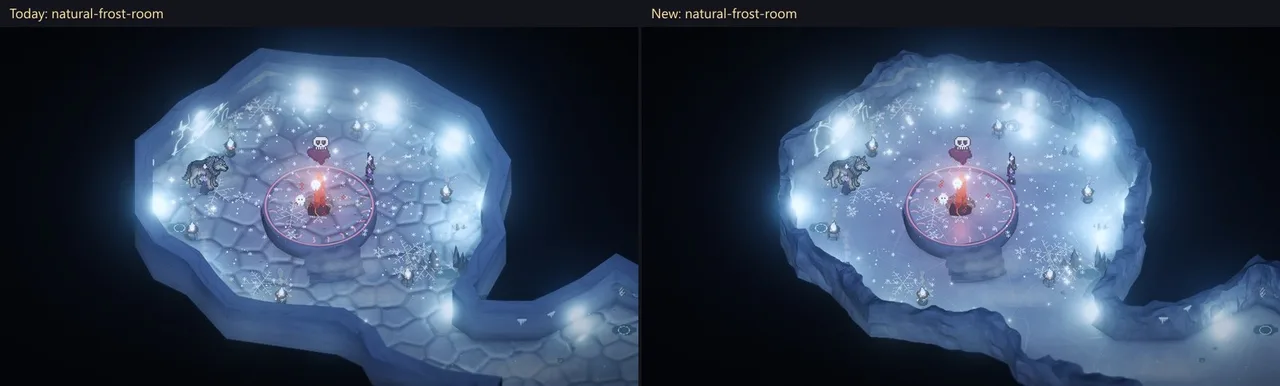
Cave, mine and burrow walls used to be flat strips, and their floors still showed flagstone paving, so an ice cave looked paved. They now have shaped rock walls and floors of their own: fractured rock, clear ice, trodden earth and worked mine floor. Built halls keep their flagstones.
The exploring camera also moved closer, set from the window's height, so the new sprites draw at full size at 1080p. And the first boss win no longer freezes the page while shaders rebuild: the drop card used to take 12 to 15 seconds in tests, and now takes about 2.
Plans, and they may change
Everything in this section is an idea or an experiment. None of it is in the game, and none of it has a date.
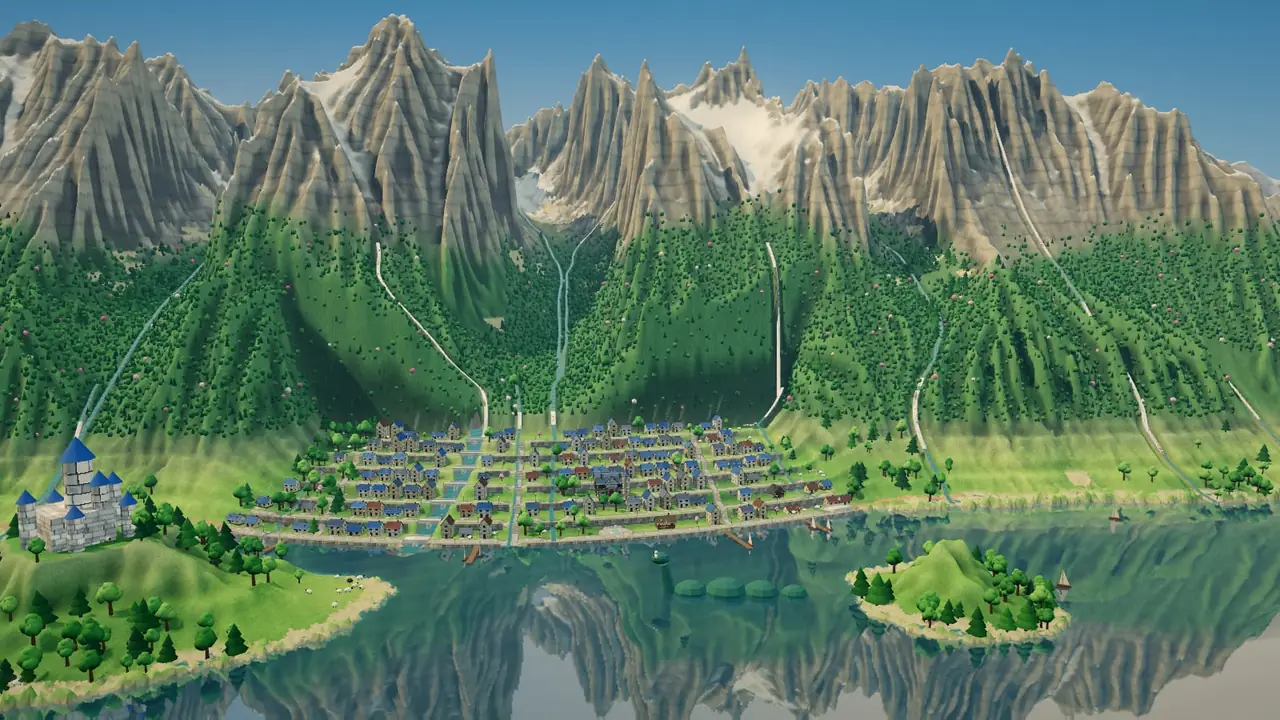
A town generator. The town you'll build up after the camp gets its own HD-2D map, and the game is meant to have more than one town, so a land generator is being built to put them on. It grows terrain from a recipe, lets rain carve valleys and fills basins into lakes, and so far makes eight lands inspired by real places, from a long valley to a drowned crater. The picture is one of them, with a terraced town on a quay and a castle on a headland. It's an engine test, reachable only from a developer route, and not the town's design. A lakeside terrace is the direction, and the actual layout waits for more polish. The longer aim is for towns and dungeons to run on the same code, so that a better town makes a better dungeon, and fights in town are an idea I like.
More cards, witches and carts. Besides the fortunes that last an expedition, there could be one-use spell cards, such as a big meteor, an ice rain, a chasm opening under the foes or a purple void. Cute witches would run the card sets, riding things like a floating pumpkin or a floating eyeball, and their cauldrons could hold prizes: a card, a pet, some equipment, or a witch who joins your roster. Carts would come in types by cuisine, with drinks carts, dim sum carts and cauldron carts. The first cauldron cart is a giant jack-o-lantern with a green glowing swirl inside, run by a witch barmaid who sings while she brews.
Further afield. The regions idea spreads the story across a world map, one region after another, with small outposts away from your home town. Islands are the first expansion on the list, and I'd love a pirate pack for them. Smaller ideas include holiday skins that return each year and flintlock pistols, with a Gatling gun as a rare top weapon.
Not checked yet
None of this has run on a real RTX 3060 or 4060. The timings come from the 3080 Ti, shared with other work and noisy, and the lighting and rock walls were judged from stills, so flicker and shimmer in motion haven't been checked. The barmaid and balance numbers come from simulation. Tarot values are placeholders.